
The Dieting Came Before the Body Fat
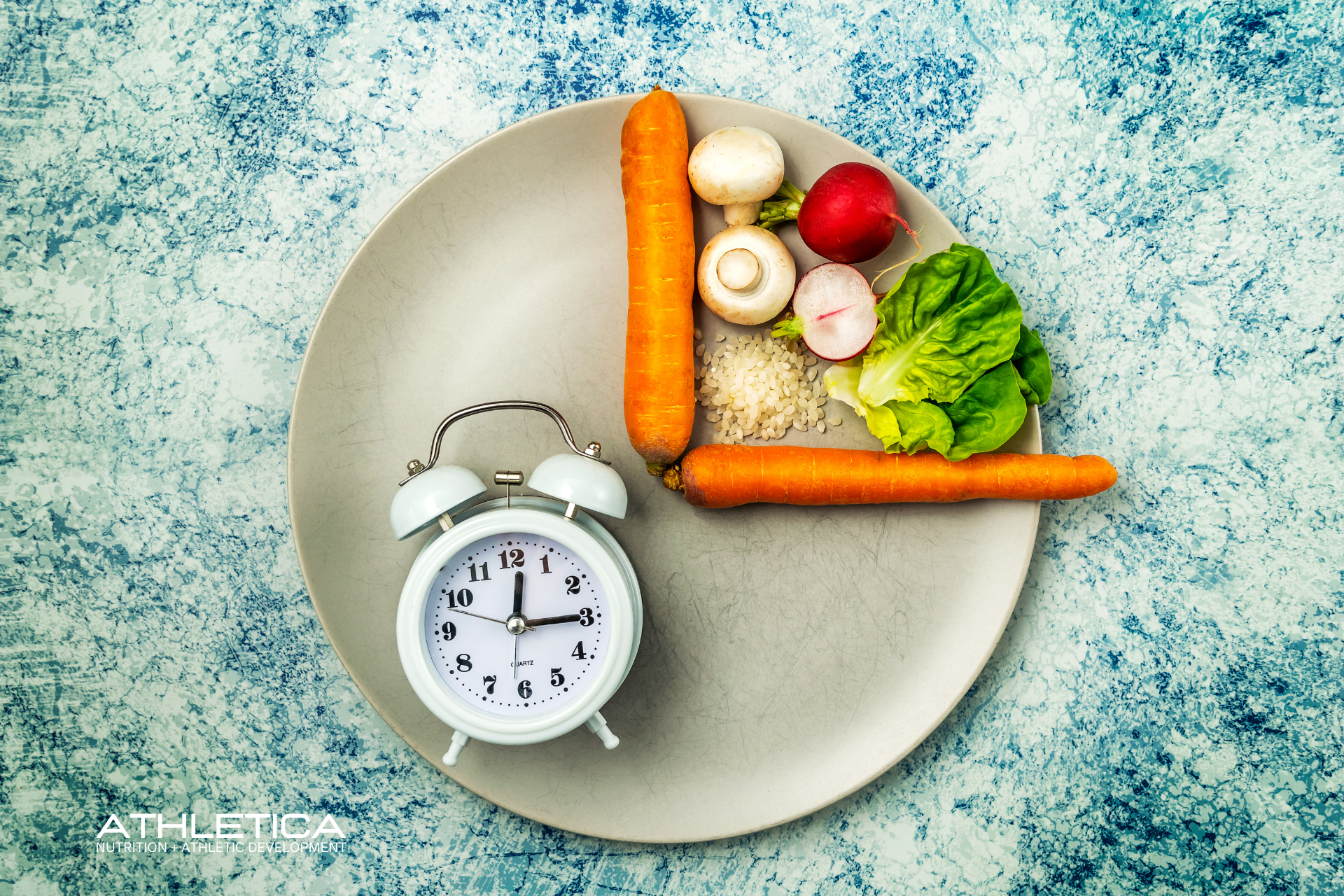
Why your dieting probably started before your body fat increased
Read Time: 10 minutes
Author: Jamie Scott
Practitioner observations after nearly 30 years in nutrition and performance coaching
The Patterns
Most people I coach aren't eating too much in the way they think they are. If someone has found their body fat has increased, they will believe that it is the result of eating too much all day long. Or at least when their body does its magic calories in/calories out audit at midnight every day, there is a 24-hour surplus that needs addressing through eating in a deficit all-day-long the following day.
In reality, however, most are eating in a skewed, asymmetrical pattern that often shows up in two directions at once:
The vertical pattern is what happens within a single day. Little or no breakfast, maybe a coffee. Lunch is an afterthought, small to moderate, maybe a small salad, eaten at the desk or skipped altogether. Then from mid-afternoon onwards, appetite and cravings increase, willpower caves in, and the real eating starts: a snack on the way home, a relatively large dinner, and then more food or drink through the evening, the body firmly in catch up mode.
By the time the day is over, the vast majority of the day's calories, even if not particular large in an absolute sense, are concentrated into a six-hour window at the back end of it while the first twelve hours of being awake were run on next to nothing.
The horizontal pattern is a similar concept, just stretched across a week. From Monday to Thursday, most people eat carefully, “cleanly”, oftentimes quite restrained, and often with a genuine sense of virtue about doing so. Then Friday arrives. Dinners out, drinks with friends, pizza and chill, Sunday brunch, and all washed down with alcohol, because life is about balance, right? It’s a weekend of social eating and drinking that runs through to Sunday night. Four or five "good" days, two or three days that carry a hugely disproportionate share of the week's actual intake.
Most people reading this should recognise themselves immediately in one or both of these descriptions, because it's an extremely common way to eat, and no matter the balance of each pattern within individuals, this is the shape of how most that I and my colleagues see eat, week in, week out, for years.
There's a part to these patterns that almost everyone gets wrong. The instinct is to assume the hours and days of deficit cancel out the hours and days of surplus and vice versa. Skipping breakfast and eating lightly for five days "earns" the block of chocolate at night or the pizza and the drinks on the weekend, and that if the daily and weekly total roughly balances, no real damage is done, right?
It doesn't work that way. The body isn't a ledger that simply nets the days and week off at zero every midnight. Running a deficit for five days and a surplus for two are two different physiological states, and each one does something to the body that the other doesn't undo. The under-eating days aren't cancelled by the over-eating days, and the over-eating days aren't excused by the under-eating ones. They stack. That's true even in a week where the arithmetic works out to maintenance, and it's the reason two people can eat the same weekly total calories, one steadily and one in this skewed shape, and end up in very different places over the following years.
And repeated over years, this creates something more specific than "overeating," and it has a name in the research literature: collateral fattening.
Collateral Fattening Explained
Here's the mechanism in plain terms. When someone runs a sustained energy deficit, whether through intentional restrictive dieting or the kind of chronic under-eating described here in my “patterns”, they lose both fat and lean tissue (muscle, organs, bone). When they come out of that deficit, whether deliberately or because life and appetite catch up with them, the body doesn't rebuild fat and lean tissue at the same rate. Fat comes back first and faster. Lean tissue is slower and more metabolically expensive to rebuild, and perhaps more importantly, requires a strong stimulus to do so (hence the importance of progressive strength training).
The body keeps appetite elevated for longer, until lean tissue has caught up. When that appetite is being met with either low protein, high fat and/or high carb foods (non-protein energy), or high protein energy foods that come with an additional payload of fat or carbs, it gets very easy to overshoot where your body fat was before you started all this.
This isn't a fringe idea. It comes from a reanalysis of the classic Minnesota Starvation Experiment and has since been formalised into a mathematical model by the Swiss researcher Abdul Dulloo and colleagues (PMID: 29559726). Their model makes a specific and important prediction: this fat overshoot is largest in people who were lean or at a normal weight when they started dieting, and smallest, sometimes negligible, in people who already have obesity. That prediction lines up with a separate body of long-term population research: several large studies have found that dieting predicts future weight gain, and that this effect is strongest in people who started at a normal, healthy weight.
“Put simply: for a meaningful number of people, especially those who start dieting when they don’t really need to, the dieting comes first and the extra body fat follows, years later, as a consequence of the restriction-recovery cycle repeating itself. They didn’t get fat and then diet. They dieted and got fat.”
The Pattern Correction and Why it Feels Like “So Much Food”
When someone shifts from their old, skewed pattern (skipping breakfast, small lunch, concentrated calorie intake in the evening) to something more evenly spread across the day, they almost always report feeling like they're "eating so much food," even when the total calories are the same or lower than before.
Two things explain this, and neither of them means they're actually being overfed:
Food volume and frequency feel different from calories. Three or four meals across a day involves more separate eating occasions, more chewing, more plate volume, and more digestive activity than the old pattern of one large evening meal. The body and the brain register that as "more," even when the maths says otherwise.
Protein and fibre are usually higher. Both increase satiety per calorie. A meal built around adequate protein simply feels more filling than the low-protein, energy-dense foods that dominate the old evening/weekend surplus (bread, alcohol, fried food, dessert). Feeling fuller on the same or fewer calories reads, subjectively, as "more food," not less.
It's a perception problem, not an actual energy surplus. And while I try to be very clear in my explanations to clients about this, it is seemingly very difficult for many to not interpret it all as evidence of eating too much, igniting fears of gaining weight and getting fat. This is especially pronounced in those who take the feelings of hunger and emptiness as a sign of the body burning more fat.
Higher Lean Protein Has to Be Part of the Fix
Higher lean protein doesn't just make meals more filling. It works directly against the collateral fattening mechanism itself. Recovery from any period of energy restriction preferentially rebuilds fat over lean tissue partly because there usually isn't enough protein and resistance-training stimulus available to prioritise lean tissue repair. Front-loading protein throughout the day, rather than getting most of it in one evening meal, gives the body a steady supply to rebuild and maintain muscle, which shifts the recovery process away from fat-dominant tissue restoration and back toward rebuilding the lean tissue pool.
It also blunts the drive to overeat energy-dense food during the recovery phase, because the appetite system is no longer chasing a protein target it has been missing most days during the vertical restriction pattern. It doesn't eliminate collateral fattening, but it's the single most practical lever available to reduce how much of the recovery goes to fat rather than lean tissue. And this is why, in this context at least, lean proteins should be prioritised. You are aiming to maximise protein without overshooting on non-protein energy calories. For example, a lean turkey breast and high fat sausages could, theoretically, have the same protein content, but the higher fat sausages options are going to deliver a lot of additional calories just to get that protein.
A Case in Point
Take the example of an individual who fits this pattern almost exactly, and who the research flags as highest risk. Young, athletic, genuinely fit, with a build carrying good levels of muscle rather than excess fat. Nothing about her body composition indicates she needs to lose weight. But because her weight on a scale was higher than she would like (mostly due to distorted social comparison), she convinced herself she needs to diet.
This is precisely the scenario the research models point to. She isn't overweight - for now. But if she goes ahead and restricts, especially in the skewed, low-protein pattern most people default to, and repeats that cycle every few years for the next two decades the way so many women do, the collateral fattening mechanism predicts she'll be carrying meaningfully more body fat in her 40s and 50s than if she'd never dieted at all. The irony is exact: she'll have dieted her way into the very outcome she was trying to avoid, starting from a body that never needed the intervention in the first place.
And for those already in their 40s and 50s dealing with the fallout from decades of this pattern, the fix is the same, just overdue. Eat across the whole day instead of cramming it into the back end of it. Build every meal around lean protein and fibre first, calories second (not absent – just second and appropriate to your context). Put a progressive strength training programme underneath all of it, because that's what decides whether the next recovery cycle rebuilds muscle or fat. And do this for years, not weeks. None of this is a diet. It's just closing the gap between how you eat and how your body actually needs to recover, so the fat overshoot stops compounding, one cycle at a time.
